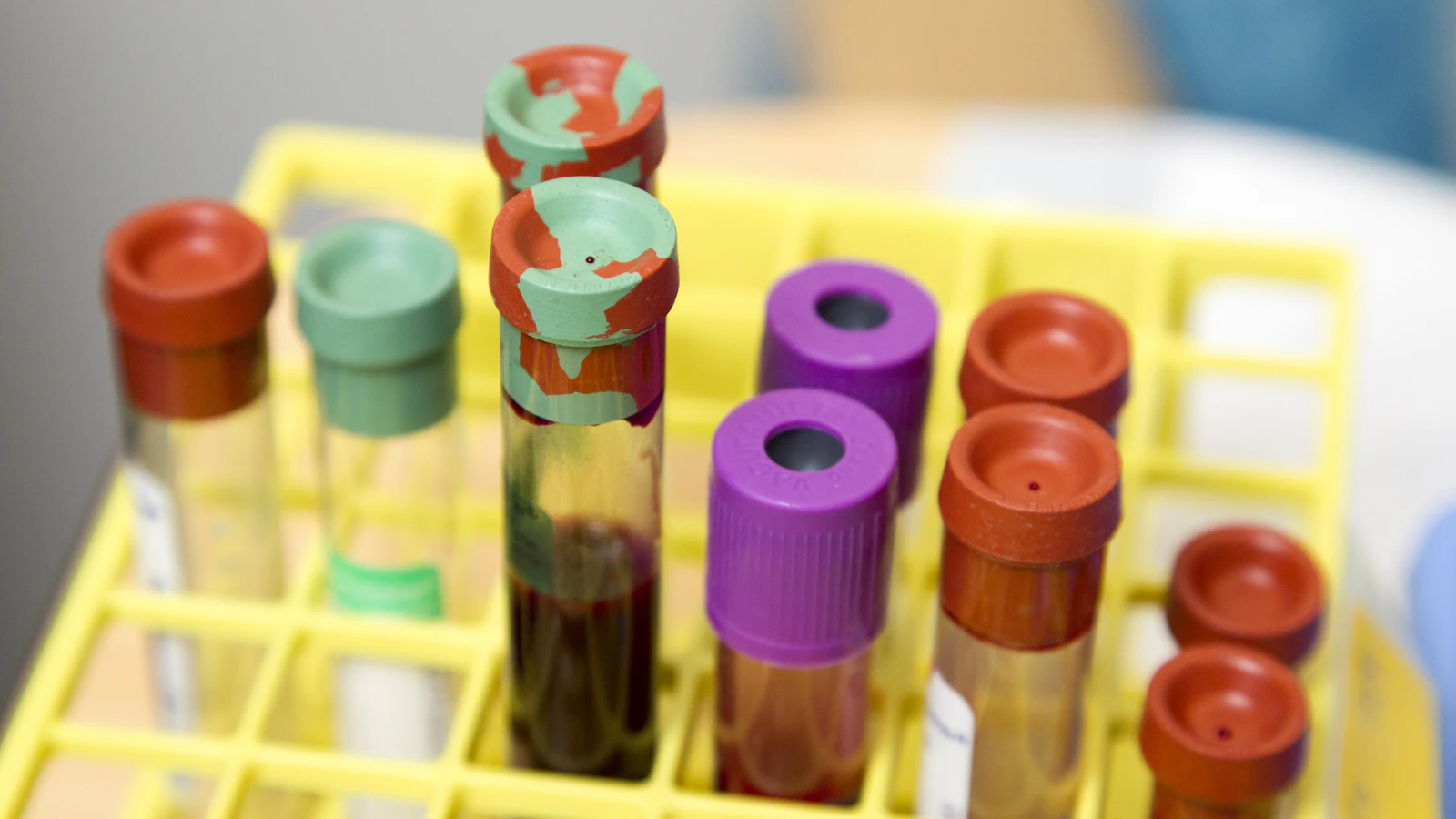
After 60 something changes in how your body handles vitamins and minerals. You often absorb them less well, and yet you need them just as much. A large review of community-dwelling older adults flagged six nutrients that fall short more often with age, including vitamin D, calcium and magnesium (ter Borg et al., 2015).
We notice that many people only take deficiencies seriously once the symptoms are already there. That is a shame, because a blood value often changes before your feeling does.
In this piece we calmly explain which nutrients matter more, why absorption drops, and what a blood test can and cannot tell you.
What are vitamins and minerals, and why do they matter more with age?
Vitamins and minerals are small building blocks your body needs to work, but usually cannot make itself. You get them from your food. After 60 you often eat less, absorb less, and sometimes use medicines that affect the balance. That is how a deficiency develops quietly.
Think of magnesium for your muscles, potassium for your heart rhythm, iron for your energy and vitamin D for your bones. Small on their own, but together they carry a lot.
What is special is that you often do not notice a deficiency for a long time. Your body first fills small gaps from its store. Only when that store shrinks do the complaints come. A blood value can sometimes make that quiet drop visible earlier than your feeling does.
So this is not about mega-doses or expensive supplements. It is about knowing how you are doing.
Which deficiencies are most common after 60?
Vitamin D, calcium and magnesium are among the nutrients that most often sit below the norm in community-dwelling older adults (ter Borg et al., 2015). Deficiencies of vitamin B12, iron and sometimes zinc also occur. The picture differs per person, and that is exactly why measuring can help.
The Dutch Nutrition Centre (Voedingscentrum) names vitamin D as a known point of attention for people over 70, because the skin makes less vitamin D in the sun with age.
| Nutrient | What it supports | Why with age |
|---|---|---|
| Vitamin D | Bones and muscles | Skin makes less in the sun |
| Vitamin B12 | Blood and nerves | Less stomach acid, lower absorption |
| Iron and ferritin | Energy and blood formation | Blood loss, lower absorption |
| Magnesium | Muscles and nerves | Less appetite, sometimes water pills |
| Potassium and sodium | Heart rhythm and fluid balance | Medicines and slower kidneys |
| Zinc | Immunity and wound healing | Lower absorption, one-sided diet |
This table is a starting point, not a diagnosis. Your own picture depends on your diet, your medicines and your health.
What stands out is that in older adults it is rarely about one nutrient. More often several small deficiencies play up at once, reinforcing each other. A low vitamin D and a low iron store, for example, can together cause more fatigue than you would expect from each on its own.

Why does your body absorb less well with age?
With the years your stomach often makes less stomach acid. As a result, nutrients such as vitamin B12 and iron are released less easily from your food. You may also eat less varied, for example due to a smaller appetite or trouble chewing. So absorption drops slowly, even with a good diet.
On top of that, the kidneys work more slowly with age. That changes how your body handles potassium and sodium. We see this mainly in people who use water pills.
A deficiency therefore does not always mean you eat too little. Often it is about absorption, and that is an important difference. You can eat well and still have a low value.
Want to know how your energy links to these nutrients? Then also read energy and vitality after 60.
Which symptoms can point to a deficiency?
The symptoms of a deficiency are usually vague and non-specific. Think of fatigue, muscle cramp, tingling, a pale colour or less appetite. Precisely because these also fit ageing itself, they are noticed late. A blood test can then bring clarity.
A few examples help. Persistent fatigue and a pale colour fit a low iron or a low vitamin B12. Muscle cramp and a restless feeling are sometimes linked to magnesium. Confusion or a weak feeling can fit a low sodium.
Important: symptoms never point to a nutrient with certainty. They only give a direction.
Do you notice persistent tiredness? Our explainer on anaemia in older adults goes into that further.
What does a blood test show, and what does it not?
A blood test gives a snapshot of a number of values in your blood. That is valuable, but it is not a complete picture of your nutritional state. Some nutrients sit mainly in the cells and tissues, and then the blood value says less about your total store.
Magnesium is a good example. Most magnesium sits in bones and cells, so a normal value in the blood does not always rule out a deficiency. Ferritin, by contrast, can rise temporarily during inflammation, even while your iron store is low.
| Blood value | What it shows | The nuance |
|---|---|---|
| Ferritin | Your iron store | Can look higher during inflammation |
| Magnesium (serum) | Magnesium in the blood | Says little about the total store |
| Vitamin B12 | B12 in the blood | Active B12 sometimes gives a sharper view |
| Sodium and potassium | Fluid and salt balance | Shifts with medicines and fluid |
That is why the result is worth a conversation, not a final verdict. At Levenswijs a doctor registered in the Dutch BIG register reviews every result and places it in context.
Which vitamins and minerals can you have measured?
You can have a number of these values measured without a referral. For vitamins and iron there is the Levenswijs Vitamin and Iron Panel. If you first want to read per nutrient, you can do so below.
We have written separate, calm explainers on the most common questions:
- Magnesium deficiency: symptoms and what your blood shows
- Potassium deficiency: symptoms, causes and your potassium value
- Low sodium: why older adults are at extra risk
- Zinc deficiency: symptoms and when a blood test makes sense
- Low ferritin: what it says about your iron store
For bones and nerves there are also separate pieces on vitamin B12 deficiency in older adults and on bone health, calcium and vitamin D.
What role do your medicines play in deficiencies?
Widely used medicines can affect the balance of vitamins and minerals. This is a part that is often forgotten, while older adults in particular use several medicines at once.
Long-term use of metformin, a medicine for type 2 diabetes, is linked to a lower vitamin B12. Acid-reducing medicines lower the absorption of B12 and iron, because there is less stomach acid to release these nutrients from your food. Certain water pills can change potassium, sodium and magnesium.
That does not mean these medicines are bad. They are often exactly what you need. It does mean it can be wise to have a few values checked if you use them long term.
Important: never stop your medicines on your own. Discuss your concerns with your GP or pharmacist, who can look at it with you.
How do you keep your vitamins and minerals up?
The basis is and remains varied eating. Vegetables, fruit, wholegrain products, nuts, legumes, meat, fish and dairy together provide most vitamins and minerals. That way you get small amounts of many nutrients, exactly as your body uses them best.
The Dutch Nutrition Centre (Voedingscentrum) advises people from 70 to give extra attention to vitamin D, because the skin makes less of it in the sun with age. For most other nutrients, an ordinary, varied diet is a good basis.
With a smaller appetite it helps to take smaller, nutritious portions more often instead of three large meals. A dietitian can think along with you if eating becomes difficult, for example due to chewing problems or a changed taste.
Supplements can be worthwhile, but more is not always better. Too much of some nutrients actually causes complaints. So get advice before dosing high yourself.
An example from practice
Suppose you are 72 and notice in recent months that you tire more quickly and cramp more often. You eat healthily, so you do not quite understand it. A blood test shows that your ferritin is low and your vitamin B12 is on the low side, while your haemoglobin is still normal.
That picture is exactly why measuring early can help. The store of a nutrient often drops before your blood picture shows it. With such a result in hand, you can look with your GP at what is wise.
This is an invented example, but we often recognise the pattern. Vague complaints and a normal-looking blood picture do not have to contradict each other.
What can you expect from a blood test at Levenswijs?
At Levenswijs you have blood drawn at a calm moment, without a referral from your GP. You choose a panel that fits your question, for example for vitamins and iron. That way you keep control over what you want to know.
After the blood draw you receive your result in understandable language, with an explanation per value. Every result is reviewed by a doctor registered in the Dutch BIG register, who places the values in context.
That is not a full diagnosis, and we do not want to suggest that. It does give you something to hold on to and a well-founded starting point for a conversation with your own GP.
When is a good moment to have things measured?
There is no fixed schedule that is right for everyone, and we do not want to prescribe one. There are moments, though, when people choose to look at a few values themselves. Think of persistent fatigue, recovery after an illness, or the start of a period with less appetite.
In winter some people over 60 choose to have their vitamin D measured, because the skin makes little of it then. Others do it when they use a medicine long term that affects absorption.
It is not about testing as often as possible. It is about a conscious moment when you want to know something, and having it looked into calmly.
Vitamins and minerals work together
Vitamins and minerals are not separate knobs you adjust one by one. They work together. Iron needs vitamin C for better absorption, and calcium and vitamin D work together on your bones. A shortage of one nutrient can affect how another works.
That is why a doctor prefers to look at the whole rather than at one single value. A low value is a puzzle piece, not a final conclusion.
That is also why we emphasise context. Your diet, your medicines, your complaints and your values belong together. Only together do they tell a story.
When is it better to go straight to your GP?
A blood test at a calm moment is meant to give insight, not to sort out acute complaints. Some signals do not belong on hold. With sudden confusion, severe muscle weakness, an irregular heartbeat or unexplained falls, it is better to call your GP or the out-of-hours GP service directly.
The same goes for blood loss you do not trust, or for quickly increasing fatigue and shortness of breath. Those are not moments to wait and see with a test.
A test at Levenswijs fits the calm questions: persistent, mild complaints, or simply wanting to know how a few values are doing. We are happy to take our time, but safety always comes first.
Frequently asked questions
Below are the questions we hear most often about vitamins and minerals later in life.
References
- ter Borg S, Verlaan S, Hemsworth J, et al. Micronutrient intakes and potential inadequacies of community-dwelling older adults: a systematic review. Br J Nutr. 2015;113(8):1195-1206. PMID: 25822905.
- Netherlands Nutrition Centre (Voedingscentrum). Vitamins and minerals. Accessed 2026. voedingscentrum.nl.
- Health Council of the Netherlands (Gezondheidsraad). Dietary reference values for vitamins and minerals. The Hague. gezondheidsraad.nl.
Would you like to have a number of vitamins and minerals checked at a calm moment, without first booking an appointment with your GP? At Levenswijs Health you can. Every result is reviewed by a doctor registered in the Dutch BIG register. A blood test does not provide a diagnosis. For treatment decisions, always discuss your results with your GP.
Często zadawane pytania
Which vitamins and minerals matter more after 60?
Vitamin D, calcium and magnesium sit below the norm more often in older adults, and vitamin B12, iron and sometimes zinc also deserve attention. The picture differs per person, depending on your diet and medicines. A blood test gives direction, but does not provide a diagnosis.
Why do I absorb vitamins less well with age?
With the years the stomach often makes less stomach acid, so nutrients such as B12 and iron are released less easily from food. A smaller appetite and certain medicines also play a part. A deficiency then develops gradually, even with a good diet.
Does a blood test show all deficiencies?
No. A blood test is a snapshot of a number of values and not a complete picture of your nutritional state. Some nutrients, such as magnesium, sit mainly in cells, so the blood value says little about the store. Discuss your result with your GP.
Do I need a referral to have my vitamins measured?
No. At Levenswijs you can have a number of vitamins and minerals measured without a referral. The result is reviewed by a doctor registered in the Dutch BIG register. For treatment, your GP remains your point of contact.
Autor