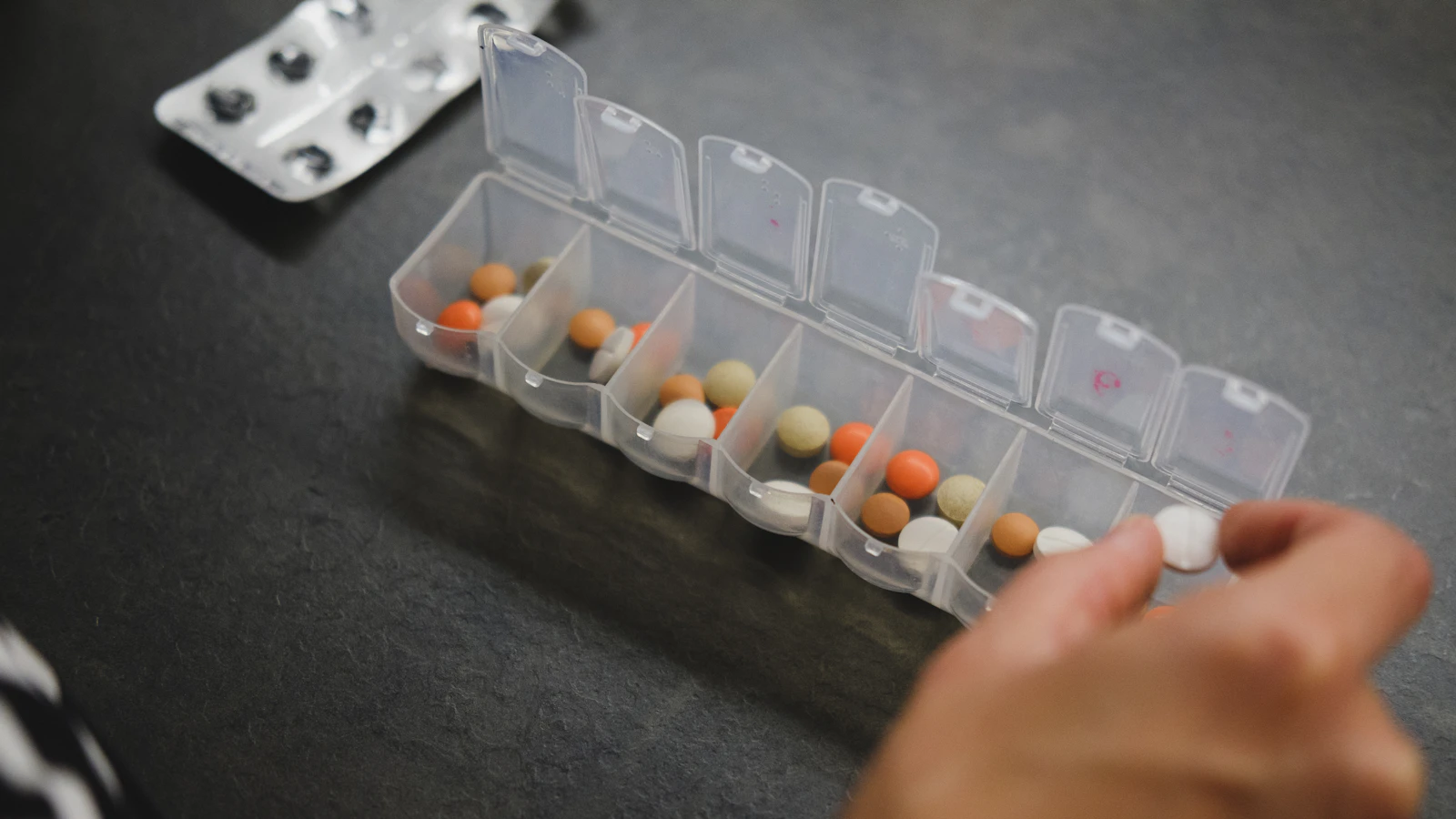
Picture a sink whose drain is half blocked. The water still goes down, but more slowly. The same applies to medicines and your kidneys: many drugs leave your body through the kidneys, and if those work a little more slowly, the drug stays in your blood longer. In older people this is not a detail but a common reason why an ordinary dose can suddenly feel too strong.
One thing up front, and it matters: this article is about knowing your kidney function, not about adjusting your own medication. Never change a dose on your own initiative. My position is simple: knowing your eGFR is a way of taking charge, not of going over your doctor's head.
Why does your kidney function matter with medicines?
The kidneys filter waste from your blood and clear many medicines through the urine. If they work more slowly, some drugs keep circulating longer and the effect, or a side effect, can be stronger. The measure doctors use to track this is the eGFR, the estimated speed at which your kidneys filter.
The eGFR is calculated from your creatinine, a waste product in the blood, together with your age and sex. The Dutch College of General Practitioners (NHG) uses the eGFR in its Chronic Kidney Damage guideline precisely to decide whether a medicine can be prescribed safely and at which dose. By knowing your eGFR, your GP can tailor the dose to your body.
What is polypharmacy and why does the kidney matter more then?
Polypharmacy means someone uses several medicines at once, often five or more. In later life this is more common, because several conditions can occur together. The more drugs, the greater the chance that one of them has a dose that depends on kidney function.
Polypharmacy is not a problem in itself, provided it is well supervised. A periodic check of your kidney function is part of that. The NHG advises weighing kidney function in medication reviews for older people, precisely because it can decline gradually and unnoticed. The National Institute for Public Health (RIVM) shows in its Public Health Foresight Study that the number of older people with several chronic conditions is rising, which makes polypharmacy increasingly common.
Which medicines need attention for the kidneys?
For several commonly used medicines a doctor looks at your kidney function so the dose fits. The table below gives a general picture. It is information, not advice for your personal situation. Never change anything yourself, and discuss your medicines with your GP or pharmacist.
| Type of medicine | Why the kidney matters | What is sensible |
|---|---|---|
| Certain water tablets | Affect fluid and salts in the body | Discuss periodic checks with your GP |
| Some blood pressure lowerers | Act directly on the kidneys | Discuss checks with your GP |
| Certain painkillers (NSAIDs) | Can strain the kidneys with long-term use | Discuss use with your pharmacist |
| Some diabetes medicines | Dose depends on kidney function | Discuss checks with your GP |
| Certain antibiotics | Are cleared through the kidney | The doctor adjusts the dose if needed |
Which medicines matter for you is something your GP or pharmacist knows. They have the overview of everything you take.
How often should you have your kidney function checked?
How often a check is sensible depends on your medicines, your age and your other values. The eGFR declines gradually with the years: that is partly a normal part of ageing. For that very reason, a periodic measurement can help your GP follow the trend rather than judge a single value. Your GP decides the right interval together with you.
If you want to know more about how the kidney and age are connected, read our guide on kidney function, eGFR and age. The wider picture is in what changes in your blood values after 60.
What can you do yourself?
You can have your kidney function and blood sugar measured with the Diabetes Panel from Levenswijs, without a referral. Take the result to your GP or pharmacist so they can review your medication safely. Sometimes, alongside eGFR, cystatin C is measured, a second measure of kidney function that can add value in doubtful cases.
My advice: know your kidney function and actively share the result with your care provider. That way they can make the right choices. Never change a dose yourself, and never simply stop a medicine. A blood test does not make a diagnosis and does not replace a conversation with your GP.
Frequently asked questions
What is a normal eGFR for an over-60?
An eGFR above 60 is often seen as favourable, but the value declines gradually with age. What is appropriate for you is judged by your GP in relation to your other values and your medication.
Can I improve my kidney function?
You can support your kidneys by being active enough, aiming for a healthy weight and a healthy blood pressure, and not using painkillers unnecessarily often. Discuss what suits you with your GP.
Do I need to fast for a kidney function test?
For creatinine and eGFR you usually do not need to fast. If blood sugar is also measured, fasting may be needed. Follow the instructions with your test.
Często zadawane pytania
Why should I know my eGFR if I take medication?
Many medicines are removed through the kidneys. With a lower kidney function they can build up. By knowing your eGFR, your GP can adjust the dose better. Never change anything yourself.
May I adjust my medication myself if my kidney function is lower?
No. Never change a dose or stop a medicine on your own. Take your result to your GP or pharmacist, so they can assess your use safely.
What is polypharmacy and why does kidney function count extra then?
Polypharmacy means using several medicines at the same time, often five or more. Good adjustment to the kidney function then weighs extra heavily. A periodic check is part of that.
Do I need a referral?
No. At Levenswijs you can have your kidney function measured without a referral. The result is reviewed by a doctor registered in the Dutch BIG register. For treatment, your GP remains your point of contact.
Autor