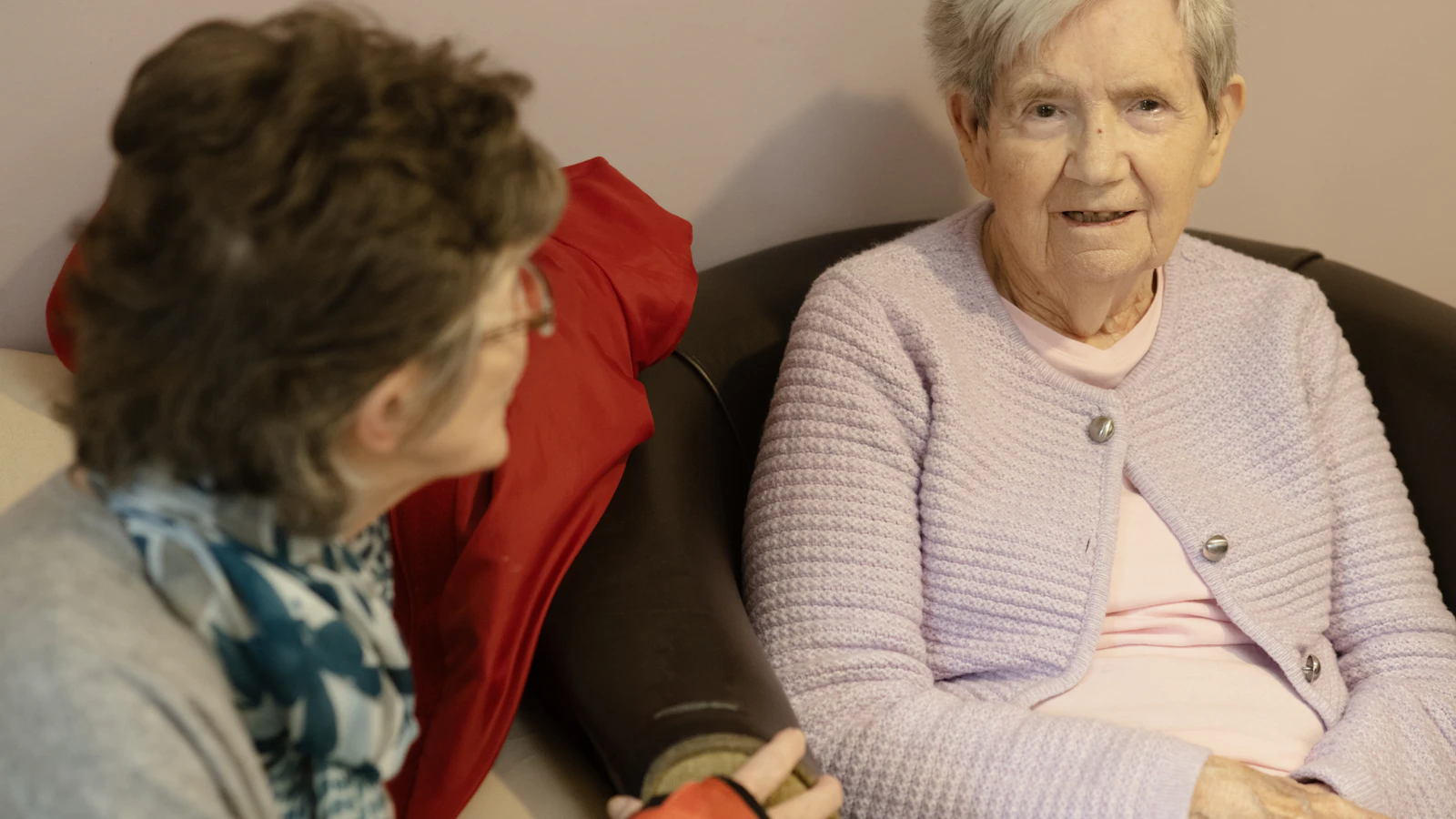
At the last birthday visit it struck you: your father got up from his chair with more difficulty, and your mother told the same story three times. On the drive home it kept nagging. Is this just getting older, or should I be worried? Many people between 45 and 60 carry that question around, without quite knowing what to watch for.
We believe that caring well for your parents begins with listening, not taking over. Insight helps with that, because it makes a conversation concrete rather than anxious. Below you can read which signs to watch for and how to start the conversation, with respect for their independence.
Why does your parents' health change over the years?
In later life many blood values shift slowly. Kidney function declines gradually, the body often absorbs vitamin B12 less well, and anaemia becomes more common. Thuisarts.nl describes how many of these changes go unnoticed. As a result, complaints are easily dismissed as old age. Sometimes that is true, but far from always.
Which signs can you watch for?
A few changes are worth taking seriously, especially when they persist. The table below lists common signs with a possible cause and a first step.
| Sign | Possible cause | First step |
|---|---|---|
| Persistent fatigue | B12 deficiency, anaemia, thyroid | Have blood values checked |
| Tingling in hands or feet | Possible vitamin B12 deficiency | Have B12 measured |
| Looking pale, quickly short of breath | Possible anaemia | Have blood count checked |
| Drinking and urinating a lot | Possible high blood sugar | Have HbA1c measured |
| Confusion or forgetfulness | Varied, look further first | The GP first |
Important: this table helps you choose a direction, but does not make a diagnosis. With confusion, worsening forgetfulness, or sudden changes, the GP is always the first step.
Which blood values give insight into their health?
A targeted blood test brings many of these possible causes into view. For energy and deficiencies, look at the Vitamin and Iron Panel, for blood sugar and kidneys the Diabetes Panel. If you want to understand what changes over the years first, read how blood values change after 60, or read more about vitamin B12 deficiency in older adults. That makes a conversation with your parents more concrete.
How do you discuss this without being patronising?
Your parents remain in charge of their own health. A conversation works better if you share your concern and offer a choice, rather than imposing something. Ask what they notice themselves, and listen before you come with solutions. A blood test can help turn suspicions into facts. That often takes the tension out of the conversation, because you look at a result together rather than at a gut feeling.
Respect a no as well. Sometimes the time is not right yet, and that is their right. The Dutch Heart Foundation (Hartstichting) points out that staying active, eating well, and social contact are just as important for the heart as individual numbers. Sometimes a walk together is more valuable than a test.
What if your parents would rather handle it themselves?
Not everyone wants a child keeping an eye on their health. That is completely understandable, and respecting it matters more than being right. You can let them know you are available without taking over. It often helps to offer practical, small help: a lift to an appointment, helping to understand a result, or writing down the questions for the GP together. That way your parent stays in control, and you are a support rather than a supervisor.
Look after yourself too. Worrying about a parent can be heavy, and you do not have to carry it alone. Brothers, sisters, the GP, and organisations for informal carers can think along with you. Asking for help in time is not a sign of failure, but of caring sensibly, for your parent and for yourself.
How can you help practically?
You can offer to go along to a sampling location, or arrange a test together. At Levenswijs this is possible without a referral, and the result is reviewed by a doctor. For treatment, their own GP remains the point of contact. Helping practically can also mean: making sure appointments are not forgotten, keeping track of medicines, or simply calling more often to ask how they are.
Frequently asked questions
My parent will not go to the GP, what now? Forcing rarely works. Try to find out where the resistance comes from: fear, shame, or bad experiences often play a part. Sometimes it helps to suggest a concrete, small step, such as a single blood test, rather than a full process straight away.
Which test is a good first step? With fatigue and possible deficiencies, a vitamin and iron test is often a logical start. If you suspect problems with blood sugar or kidneys, a diabetes and kidney panel fits better. When in doubt, consulting the GP is always wise.
Our advice: keep it small and concrete. One targeted test and a calm conversation often do more than a list of worries. And always discuss an abnormal result together with the GP. Remember that attention and patience are at least as valuable as any result.
Frequently asked questions
How do I know if complaints are age-related or not?
That is hard to tell from the outside. Persistent fatigue, tingling or looking pale can point to a shortage or anaemia. A blood test helps tell them apart. Discuss persistent complaints with the GP.
May I arrange a blood test for my parent?
You can help arrange it and come along, but your parent decides and gives consent. At Levenswijs a test is possible without a referral, and the result is reviewed by a doctor registered in the Dutch BIG register.
How do I start the conversation without being patronising?
Share your concern, ask what they notice themselves, and offer a choice rather than imposing something. Respect a no. A concrete step, such as looking at a test together, often works better than a list of worries.
What if the test shows something abnormal?
An abnormal result is a reason to look further, not a diagnosis. Discuss the result with your parent's GP, who decides on treatment.
Author